Every widget costs something, because the browser has to ask for it. The useful question is whether that request sits on the critical path, before the reader can see the page, or after.
What MapMyVisitors actually adds
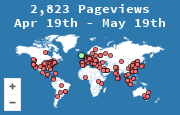
The usual embed is an image, or a small script that draws a map. The image version is the same kind of request as a logo: the HTML references it, the browser fetches it, the count happens as a side effect of the fetch. It does not parse your HTML and it does not inject a tag manager. The script version is still one file, not a stack of analytics libraries.
That is why the product can claim a light widget without claiming zero cost. One request is not zero. One request is also not the multi-hundred-kilobyte tags people are used to apologizing for. The install shape is in how to add the widget.
How to keep it off the critical path
- Prefer the image embed if you only need the map and the count. Images do not block HTML parsing the way a synchronous script in the head does.
- If you use the script, put it at the end of the body or load it deferred. Do not put it in the head without
deferorasync. - Give the image a width and a height, or a reserved box, so the page does not jump when the map arrives.
- Do not host a second copy of a huge map library yourself "for speed" and also load the widget. One of them is the feature.
A page that is already slow because of uncompressed images will still be slow. The widget did not cause that, and removing it will not fix it. Measure the page with the widget and without it, on a phone, once. If the difference is one request after the content is visible, leave it.
When it does hurt
A synchronous script in the head, a map forced into a tiny column that reflows the layout, or a template that waits on the widget before rendering anything else. Those are installation mistakes, not a property of counting visits. The HTML install puts the snippet at the end of the body for that reason. The counter still counts if the request happens late. The reader does not have to wait for the pin to appear before they can read the paragraph.