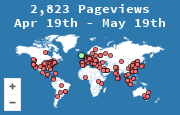
The pin looks precise because maps are precise. The data behind the pin is not. It is the registered location of a range of network addresses. That registration is a country, often a region, sometimes a city, and almost never a building. Wanting a street address from it is asking the wrong instrument.
What the lookup contains
An IP geolocation database answers "where is this address block registered?" Mobile carriers, ISPs, VPNs, and offices all register blocks in bulk. Everyone using that block shares the answer. Two readers in one cafe can be one pin. One reader on a VPN is a pin in another country. The longer explanation of the city problem is what city-level geolocation gets wrong. The mechanism is IP geolocation.
MapMyVisitors does this lookup from a database on the server. The address is not sent to a third party to be enriched into a person. There is no step in the product that attaches a name, an email, or a house number. If a screen seems to show one, it is showing something else, not this widget.
Why that is the product, not a missing feature
A public map is there so visitors can see that a site has a living, spread-out audience. A list of home addresses would be a different product, a worse one, and it would not be possible from the data anyway. Sites that claim "see exactly who is on your site down to the street" are overselling IP data or they are mixing it with something the visitor typed into a form. Do not repeat that claim about MapMyVisitors.
What you can honestly point at
Countries, over a month, on the pages that matter. A referrer that explains why a country appeared. A test visit from your own network, which should land in your country and might land in the wrong city. That last result is the demonstration: if your own city is off, a stranger's street was never available. The map is still the right picture for "people elsewhere are reading this." It is the wrong picture for finding them.