"Unique" means the product tried to collapse repeat loads from the same browser into one. It does not mean the product met the person. The usual method is a cookie, a local storage flag, or a hash of IP plus user agent. Each method fails in a known way.
How tools try to do it
A cookie set on the first pageview lets later pageviews in that browser say "you have seen me." Count the distinct cookies in March and you have "unique visitors in March." Delete the cookie, or use a private window, and you are a new unique. The same person on a phone and a laptop is two uniques. Two people who share a browser profile are one.
A method that hashes the IP address and the user agent needs no cookie. It also merges everyone behind the same office address, and it splits one person when their phone network changes the address. Privacy rules are why many newer tools prefer a short-lived cookie or no identifier at all and simply refuse to publish a unique number.
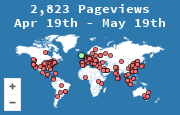
MapMyVisitors does not turn widget loads into unique visitors. Each load counts. If you need the word "unique," you need a tool that defines it, and you should quote that definition. The plain version is the glossary entry unique visitor. How the load itself is counted is what a visitor counter counts.
Why the number moves when you change the range
Uniques in a week are not uniques-per-day times seven. A person who returns every day is one unique for the week and seven daily uniques if you add the days. Adding daily uniques is the most common way to inflate the month. Use the range you mean, inside one tool, and do not sum the pieces.
What to say
"Unique visitors" is acceptable when you name the product and you know it de-duplicates. "Visitors" alone, next to a hit counter, overclaims. Say "loads" or "widget hits" for MapMyVisitors. The map is still useful. It was never a headcount.